

 TH
TH MM
MM
Nebulized Bronchodilator Therapy is a commonly used treatment for people with respiratory conditions such as asthma or lung diseases. Using a nebulizer helps convert liquid medication into fine mist particles, making it easier to inhale the medicine directly into the lungs. This allows the medication to act efficiently at the targeted area.
A Complete Guide to Nebulizer Therapy
- What Is Nebulizer Therapy?
- Benefits of Nebulizer Therapy
- When Is Nebulizer Treatment Needed?
- Nebulization Service Fees at Intouch Medicare

- Steps and Procedures of Nebulizer Therapy
- Commonly Used Medications for Nebulization
- Patients Who Are Suitable for Nebulizer Therapy
- Side Effects After Using Nebulizer Medication

- Preparation Before Nebulizer Treatment
- Care After Nebulizer Treatment
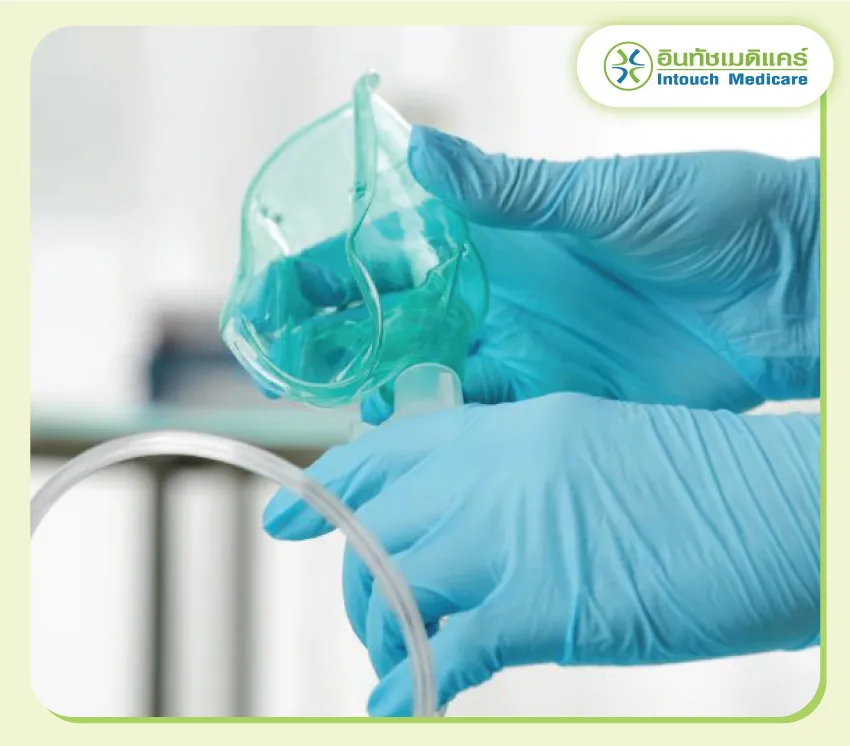
What Is Nebulizer Therapy?
Nebulizer Therapy refers to a pharmacotherapy treatment that uses a nebulization method to convert a liquid medication into the mist droplets, allowing the patient to inhale the medication through the airways.
The medication then travels to the lower respiratory tract, where it begins to take effect and provides therapeutic benefits.
Benefits of Nebulizer Therapy
- Helps dilate the bronchial airways, as the medication is delivered directly into the bronchi.
- Makes breathing easier for patients by improving airflow in and out of the lungs during nebulization.
- Allows bronchodilator medications to take effect more quickly.
When Is Nebulizer Treatment Needed?
For patients who experience shortness of breath, rapid breathing, heavy or labored breathing, or the use of abdominal muscles when breathing. If symptoms do not improve after using an inhaler, patients should seek medical care as soon as possible for nebulizer treatment. These symptoms are commonly seen in people with chronic respiratory conditions such as asthma or chronic obstructive pulmonary disease (COPD).

Nonlapann Pitagsalee, MD., Medical License No. 71033
Nebulization Service Fees at Intouch Medicare
- Nebulizer treatment for children: starting from 1,800 THB
- Nebulizer treatment for adults: starting from 1,900 THB

Steps and Procedures of Nebulizer Therapy
Nebulizer equipment
- Humidifier
- Micronebulizer cup
- Cannula tube for connecting the micronebulizer cup with the oxygen outlet from a pipeline or an oxygen tank
- Face mask with head strap
- Medications used according to the treatment plan

Nebulizer Treatment Procedure
- Confirm the patient’s name and prepare all required equipment and medications.
- Position the patient in a seated position or with the head elevated.
- The staff securely connects the oxygen outlet to the pipeline and attaches the tubing between the oxygen source and the micronebulizer.
- Ask the patient to breathe in and out slowly and deeply.
- Place the mask comfortably and securely over the patient’s face.
- Turn on the gas flow at the prescribed rate to create an appropriate fine mist.
- Allow the treatment to continue until all the medication is used, which typically takes about 10–15 minutes.
- The physician will assess the patient’s condition after the nebulizer treatment.
Commonly Used Medications for Nebulizer Treatment
- Beta-2 agonists, such as Salbutamol, are commonly used for patients with asthma.
- Anticholinergic medications, such as Ipratropium and Tiotropium, are suitable for patients with chronic obstructive pulmonary disease (COPD).
Read More: Asthma: Understanding Symptoms and Reducing Health Risks
Patients Suitable for Nebulizer Therapy
- Patients with chronic respiratory diseases who are experiencing symptom flare-ups, such as asthma or chronic obstructive pulmonary disease (COPD).
- Patients with chronic respiratory diseases who are not currently experiencing flare-ups but have been scheduled by a physician for ongoing nebulizer treatment.
Nonlapann Pitagsalee, MD., Medical License No. 71033
Side Effects After Using Nebulizer Medication
Side effects depend on the type of medication used.
Common side effects include:

1) Beta-2 Agonists (e.g., Salbutamol)
- Tachycardia; A rapid heartbeat, faster than 100 beats per minute.
- Palpitations
- Muscle tremors
- Headache

2) Anticholinergic Medications (e.g., Ipratropium, Tiotropium)
-
Dry mouth
-
Nausea
-
Constipation
-
Headache
Physician’s Treatment Experience
A male patient, approximately 15 years old, had a history of repeated visits for asthma symptoms over the course of one year. Each time he sought treatment, he received bronchodilator nebulizer therapy. Once his symptoms improved after treatment, he returned home. However, his asthma symptoms would recur, and he would return for the same nebulizer treatment each time. On one occasion, during a more detailed history taking, it was found that while at home,
the patient had been using an inhaler incorrectly and relied on only one rescue inhaler for symptom relief. He purchased the medication on his own without consulting a physician and had never been prescribed or used a controller inhaler for long-term symptom management at home.
 Nonlapann Pitagsalee, MD., Medical License No. 71033
The patient had been using only one type of inhaler. The physician adjusted the treatment by adding a controller inhaler for daily use, while continuing the rescue inhaler for symptom relief as needed. The patient was also instructed on proper inhaler technique and asked to demonstrate correct use.
After these changes, the patient’s condition improved noticeably. In the following month, asthma flare-ups became less frequent, and by the next year, the patient experienced almost no exacerbations. The main issue was the patient’s belief that medication could be used without consulting a doctor, both before and after treatment is essential for effective long-term disease management.
to receiving nebulizer therapy at a medical facility, continued inhaler use at home is equally important. Patients who use inhalers incorrectly may continue to experience frequent symptom flare-ups. Correcting inhaler technique can significantly improve treatment response and overall disease control.
– Nonlapann Pitagsalee, MD., Medical License No. 71033, – Physician at the Khlong San Clinic Branch –
Preparation Before Nebulizer Treatment
-
Patients can receive nebulizer therapy immediately when symptoms flare up. The treatment is suitable for both children and adults.
-
Avoid eating when experiencing shortness of breath to reduce the risk of choking or aspiration.
-
Inform the clinic or medical facility of any drug allergies and underlying medical conditions. If there is a previous treatment history, patients should bring relevant medical records with them.
-
Avoid smoking or using tobacco products before receiving nebulizer treatment.

Care After Nebulizer Treatment
-
Patients should wait for the physician to evaluate their condition after the nebulizer treatment is completed.
-
If any unusual symptoms occur after using the nebulizer medication, inform the physician or nurse immediately.
If you are experiencing respiratory problems and need bronchodilator nebulizer treatment, feel free to visit IntouchMedicare Clinic!
Related Articles
- Asthma: Understanding Symptoms and Reducing Health Risks
- Asthma Medications: How Many Types Are There, When Should They Be Used?
References
- Thai Asthma Guideline in Adults 2022, Thoracic Society of Thailand Under Royal Patronage.
- Administering Inhaler Medications, Division of Respiratory Diseases and Respiratory Critical Care Medicine, Department of Internal Medicine, Faculty of Medicine, Ramathibodi Hospital.
- Administering Medication via Aerosol Therapy, Khon Kaen University.
Please contact us

Nonlapann Pitagsalee, MD.,
General Practitioner (GP)
 Last updated: 13/02/2026
 Images may be used without prior permission for educational or informational purposes only, provided that proper credit to intouchmedicare.com is given.